应土木工程学院陈文礼教授和陈冠斌副研究员的邀请,韩国釜山国立大学(Pusan National University),韩国翰林院院士、Journal of Visualization主编Kyung Chun Kim教授将于2026年07月27日到08月10问我校,并作报告,欢迎感兴趣的师生参加。
报告时间:2026年08月03日 9:30-11:00
报告地点:土木工程学院303会议室
报告主题:Simultaneous measurement of three-dimensional bubble morphology, surrounding velocity field, and pressure field of a wobbling bubble
Abstract
When a bubble detaches from a nozzle and ascends through a quiescent fluid, it undergoes rapid morphological transformations during its initial transient phase before developing a steady spiral or zigzag trajectory, depending on its size. To elucidate the underlying fluid-dynamic mechanisms governing these highly deformable bubbles, this study experimentally quantifies the three-dimensional (3-D) morphological evolution alongside the surrounding velocity, acceleration, and pressure fields using time-resolved 3-D Lagrangian particle tracking velocimetry and tomographic techniques. Our findings reveal that immediately upon detachment, the bubble ascends along a strictly rectilinear vertical trajectory, undergoing an initial morphological cycle characterized by severe vertical contraction and subsequent expansion. Subsequently, the bubble transitions into an asymmetric ellipsoid, triggering a path instability that initiates a zigzag motion. The vorticity distribution during the initial transient phase is characterized by localized vortex pairs generated directly at the bubble interface—driven predominantly by the rapid interfacial deformation rather than conventional wake instability. Furthermore, the reconstructed hydrostatic-subtracted hydrodynamic pressure field reveals a morphology-dependent pressure redistribution around the deforming bubble. At the onset of lateral migration, the near-interface pressure distribution becomes markedly asymmetric and is spatially correlated with the asymmetric high-speed and vortical structures generated near the bubble interface. These observations indicate that the reconstructed pressure field represents a hydrodynamic signature of the coupled evolution of interfacial deformation, local flow acceleration, and path instability, rather than an independently measured forcing that solely determines the zigzag kinematics.
报告人Kyung Chun Kim教授简介
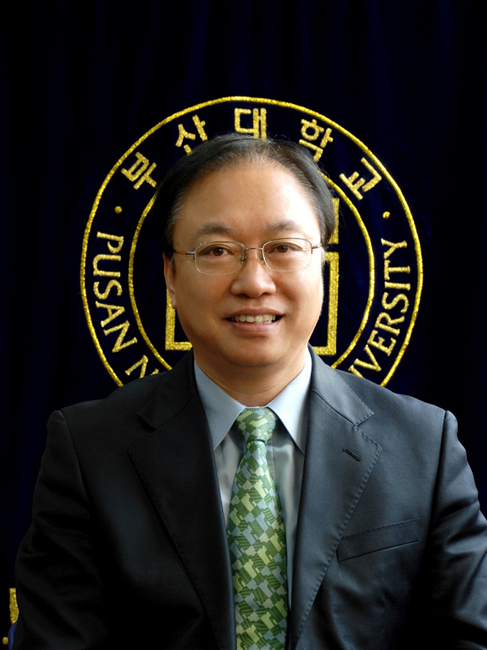 Prof. KC Kim received his BA degree at Pusan National University, Korea in 1979. He received MS and Ph.D degree at KAIST, Korea in 1981 and 1987 respectively. Since 1983, he is a professor at School of Mechanical Engineering in Pusan National University (PNU), Korea. He was invited as a visiting professor from Ottawa University in Canada for 1989-1990. He joined at the department of theoretical and applied mechanics in University of Illinois, Urbana-Champaign, USA as an invited professor for 1996-1997. He was invited as a special foreign professor from the University of Tokyo, Japan for 2009-2010. On the basis of his research outcomes, he became a member of National Academy of Engineering in Korea in 2004. He received the outstanding paper awards (1995, 2002) from KSME and KOSEF. In 2009 and 2016, he received the Academic award and the first Yeosong award from KSME. He received Nakayama award in 2012 and Asanuma award in 2014 based on contributions in world Visualization society. KC Kim was selected as a PNU Distinguished Professor in 2018. In 2019, he received Busan Science and Technology award.
Prof. KC Kim is currently serving as an Editor in Chief for Journal of Visualization. In 2020, he was selected as the director of Regional Leading Research Center for Eco-friendly Smart Ship. His research interests include: Turbulence, Two-Phase Flows, Flow Visualization, and Artificial Intelligence.