On March 17, 2024, the inaugural meeting of the drafting committee for the national standard Test Method for Capillary Water Absorption Rate of Concrete (hereinafter referred to as the National Standard), supervised by the Ministry of Housing and Urban-Rural Development, under the jurisdiction of the National Concrete Standardization Technical Committee, and primarily compiled by Harbin Institute of Technology, was successfully held in Harbin. More than 20 experts from the relevant government department (the Standards and Quotas Institute of the Ministry of Housing and Urban-Rural Development), the National Concrete Standardization Technical Committee, the leading compilation unit (Harbin Institute of Technology), and participating units such as Tsinghua University, Zhejiang University, China Academy of Building Research Co., Ltd., China Building Materials Academy, MCC Construction Research Institute Co., Ltd., and Heilongjiang Provincial Water Conservancy and Hydropower Group Co., Ltd., attended the meeting.
The drafting committee establishment meeting was chaired by Wang Zuqi of the National Concrete Standardization Technical Committee. Professor Wang Yuyin, Dean of the School of Civil Engineering at Harbin Institute of Technology, delivered a welcome speech on behalf of the leading compilation unit, expressing his welcome and gratitude to the leaders and experts attending the meeting. Professor Zhou Chunsheng, the chief editor of the national standard, gave a speech, introducing the application and approval process of the national standard development plan. Yin Weiqi from the Standards and Quotas Institute of the Ministry of Housing and Urban-Rural Development pointed out that the leading compilation unit should organize competent personnel from all parties, standardize work procedures, strengthen organizational coordination, and strive for standardization, scientific rigor, advanced technology, and practicality. They should strictly adhere to quality and schedule requirements to complete the national standard development task and technical review work, ensuring the technical level of the national standard. Wang Zuqi of the National Concrete Standardization Technical Committee announced the list of members of the drafting committee for the National Standard, declared the establishment of the committee, and explained the national standard writing regulations and precautions for the compilation work.
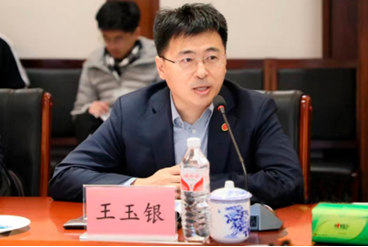
Figure 1: Dean Wang Yuyin of the School of Civil Engineering, Harbin Institute of Technology, delivering a speech
.
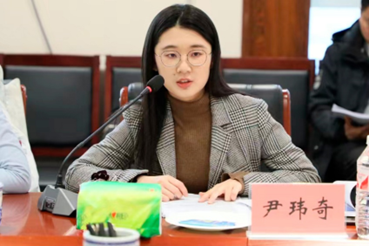
Figure 2: Yin Weiqi of the Standards and Quotas Department, Institute of Standards and Quotas, Ministry of Housing and Urban-Rural Development, giving a speech.
The first working meeting was chaired by Professor Zhou Chunsheng, the chief editor of the national standard. Professor Zhou Chunsheng introduced the work plan for the development of the national standard, explaining the testing method for capillary water absorption rate, the background and significance of the standard's development, the research framework and progress, the foundation of previous work, the tasks and schedule for the standard's development, and its expected role and benefits. The drafting committee members engaged in a thorough discussion on important issues such as the work plan and principles for developing the national standard, and determined the division of tasks and overall schedule for drafting the national standard clauses and conducting supplementary testing and verification.
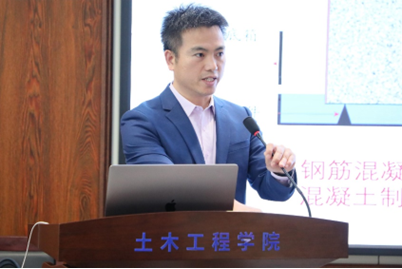
Figure 3: Professor Zhou Chunsheng from the School of Civil Engineering, Harbin Institute of Technology, introduces the work plan for developing national standards.
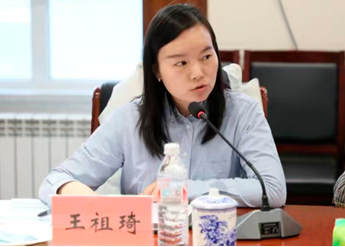
Figure 4: Wang Zuqi of the National Concrete Standardization Technical Committee delivers a speech.
As the largest building material supporting my country's large-scale infrastructure construction, cement concrete production consumes a large amount of resources and energy, while also emitting a significant amount of greenhouse gas CO2, accounting for 12% of the country's total carbon emissions (2020 data). The cement concrete industry and civil engineering sector face increasing pressure from resource, energy, and environmental constraints. Ensuring and improving the durability and service life of concrete structures is therefore urgent. Concrete durability essentially depends on the exchange of substances between the material and the service environment, with water transport and migration being particularly fundamental and critical. Over 13 years, the editorial unit has conducted systematic research on the multi-scale pore structure of cement-based materials, water transport mechanisms, capillary water absorption processes, and their rates. They have established a low-field nuclear magnetic resonance (NMR) non-destructive pore measurement technique suitable for cement-based materials, and were the first to discover the water-sensitive nature of cement-based materials, where the nanopore structure dynamically changes with water content. This research has systematically solved several key scientific problems that have plagued the international academic community for over 90 years, leading to abnormal water-related properties in cement-based materials. This research has been supported by numerous research projects, including the National Natural Science Foundation of China, the Harbin Institute of Technology Young Talents Program, and the Original Frontier Exploration Fund. The relevant results have been published in more than ten academic papers in top journals in the field of cement concrete, and one academic monograph has been published with the support of the National Science and Technology Academic Works Publication Fund.
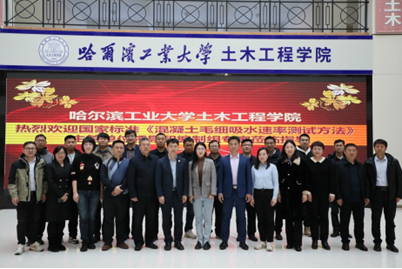
Figure 5: Group photo of leaders from the national standards industry regulatory authority, the main drafting unit, and the drafting team.