At the invitation of Professor Wu Yue of the School of Civil Engineering, Academician Yukio Tamura—Foreign Member of the Chinese Academy of Engineering, Fellow of the Engineering Academy of Japan, Foreign Member of the Indian National Academy of Engineering, and Member of the Academia Europaea—visited Harbin Institute of Technology from April 14 to April 17, 2024, and carried out a series of academic exchange activities. Under the theme Wind-Induced Damage to Building Structures and Wind-Resistant Design of Temporary, Mobile, Permanent, and Essential Buildings, Academician Tamura delivered a series of high-level academic lectures to faculty members and students. The lectures systematically investigated the mechanisms of wind-induced damage to various types of building structures under extreme wind events, tropical cyclones, and synoptic (normal) wind conditions, and emphasized the critical importance of wind load design levels in structural design, from which the audience benefited greatly.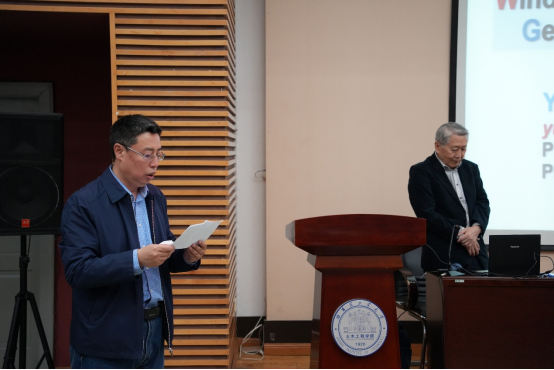
Figure 1. Dean Wu Yue introduces Academician Tamura's academic profile to students
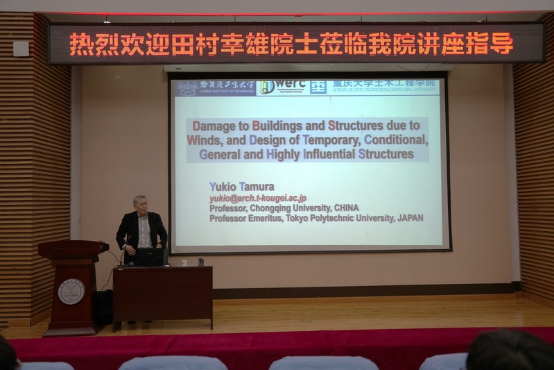
Figure 2. Academician Tamura presents wind-induced damage mechanisms and wind-resistant design of various building structures
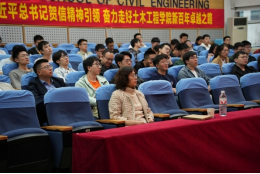
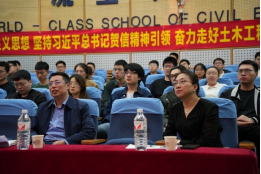
Figure 3. Faculty members and students attending Academician Tamura's lecture
Focusing on the issue of wind-induced structural damage, Academician Tamura elaborated in detail on the spatial distribution patterns of wind loads acting on structures, introduced the triggering mechanisms of typical wind damage incidents, and identified potential deficiencies and hidden risks in current structural wind-resistant design practices. Addressing the relationship between wind load design levels and the service life of building structures, he proposed, from a macro-scale perspective of the overall urban impact of wind-induced disasters, the unification of design return periods of wind loads for primary load-bearing structural systems and enclosure systems, as well as for temporary structures and permanent buildings. He further emphasized the crucial role of urban early-warning systems in mitigating damage to building structures caused by tropical cyclones and localized extreme wind events.
Academician Tamura provided the audience with rich academic insights and intellectual stimulation. By explaining complex theories and engineering technologies in a clear and accessible manner, and by integrating his extensive research experience, he vividly demonstrated the close integration of theory and engineering practice, presenting an inspiring academic feast to the participants.
During the event, Academician Tamura also engaged in interactive discussions with faculty members and students, actively responding to questions on topics such as wind-induced internal pressure effects, aerodynamic damping and vibration of structures, and wind hazard early warning. In-depth discussions were conducted on research directions and future developments in related fields. These academic reports not only broadened the academic horizons of the participants but also provided a valuable platform for scholarly exchange, promoting international academic collaboration.
The event attracted wide participation and enthusiastic responses from faculty members and students. Academician Tamura's lectures on Wind-Induced Damage to Building Structures and Wind-Resistant Design of Temporary, Mobile, Permanent, and Essential Buildings significantly broadened the academic perspectives of the audience and injected new vitality and momentum into the academic atmosphere of the School of Civil Engineering.